How to Dry Mushrooms at Home: Store, Soak and Powder
How to dry mushrooms at home? We will look at 3 different drying methods:
- Air drying: No Dehydrator Needed!
- Dehydrate mushrooms in oven: Simple Home Hacks
- Drying mushrooms in a dehydrator: The Best Ways to Preserve Your Fungi
Table of Contents
Preserving Wild Mushrooms
The main reason I dry mushrooms is to prevent the excess from going off. There are some types of wild mushrooms that I prefer dried to fresh, for example fungus in the genus Leccinum, red-capped scaber stalk. They get a nice, intense mushroom flavour when they’re dried.
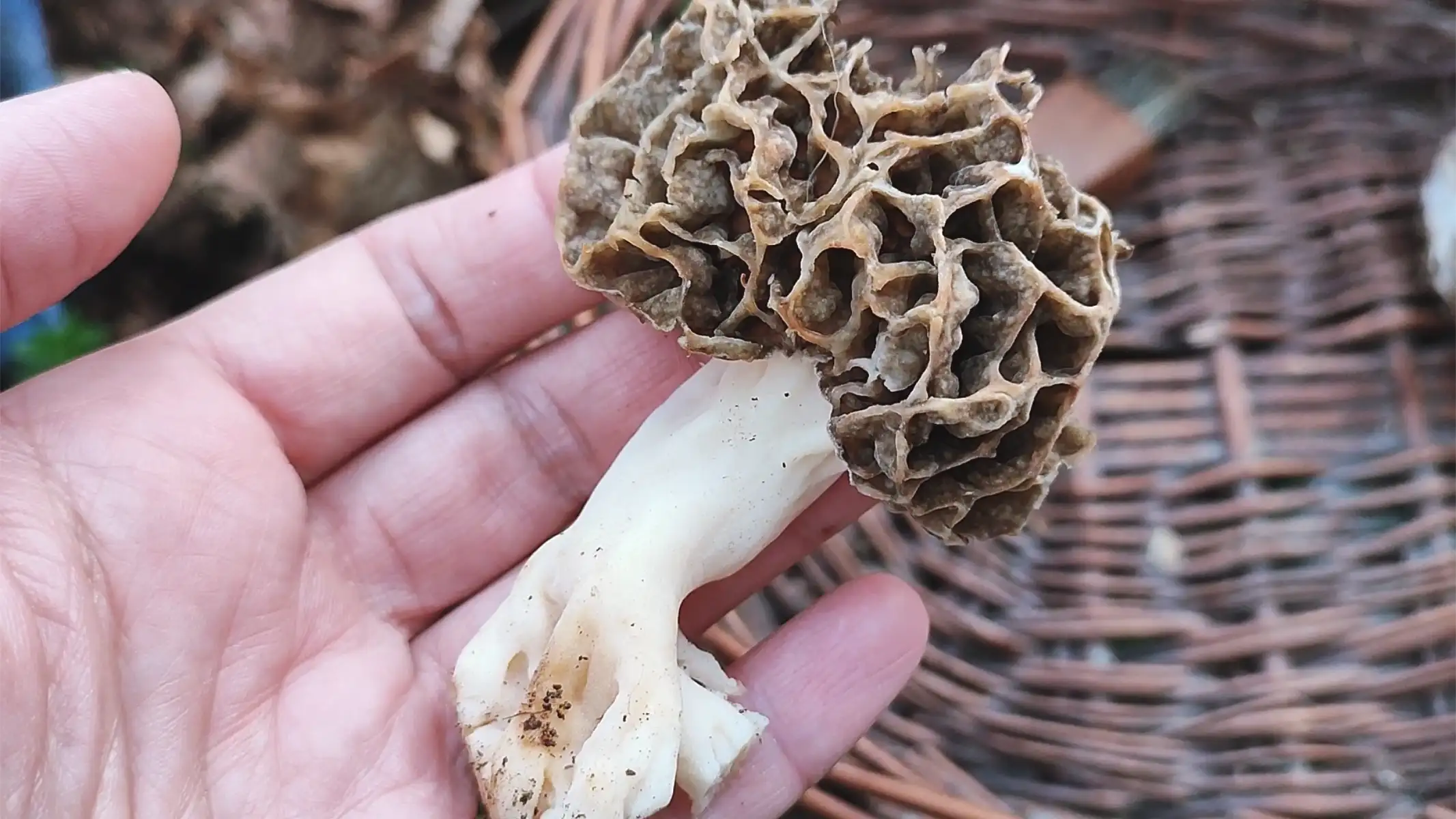
Sparassis Crispa, Morels and Craterellus cornucopioides also taste to me way better dried than fresh. But it is the matter of preferences.

If you have extra mushrooms from the market or the forest, drying them is a great way to preserve them. It’s also a simple process. Keep reading to learn how to dry mushrooms at home!
How to Dry Mushrooms? 3 Best ways to drying wild mushrooms at home
Now that we know what mushrooms to pick, let’s talk about how to dry them at home properly. There are 3 popular ways for drying mushrooms at home. Following I’ll present the three best ways to dry mushrooms, two of which don’t require a dehydrator.
How to dry mushrooms without dehydrator?
If you don’t have a dehydrator on hand, air drying and oven drying are excellent alternatives. Air drying is a simple method that involves leaving the mushrooms out in a well-ventilated space, allowing them to gradually lose moisture. Oven drying, on the other hand, speeds up the process by using low heat to dry the mushrooms evenly. Whether you prefer the natural approach or a faster method, both options can help you preserve your mushrooms for future use.
Air drying mushrooms: No Dehydrator Needed!
How to air dry wild mushrooms at home?
Here’s what you’ll need:
- Freshly foraged wild mushrooms
- A clean cloth or paper towels
- A well-ventilated space with low humidity
Here’s how:
- Clean the mushrooms, depending on type give them a gentle brush or wipe to get rid of any dirt or critters.
- Depending on the size of your mushrooms, you’ll want to slice them up into thin pieces. The thinner, the better for air drying. And they have to be equaly thin.
- Lay your sliced mushrooms out on a clean cloth. Make sure there’s plenty of space between them so the air can do its thing.
- Now, find yourself a nice, cool, and dry spot with good airflow. A screened-in porch will do wonders. Let them sit there for about a week or until they’re crispy and nicely evenly dry.
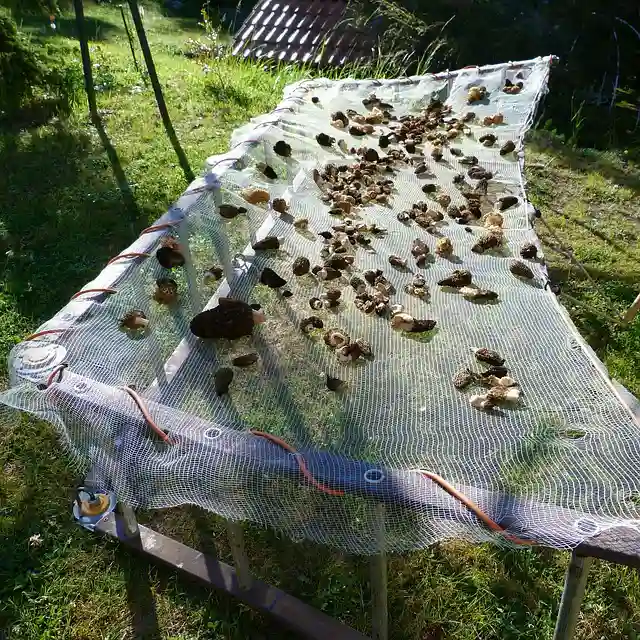
Unfortunately, I don’t have my own pictures to show you better, but this stock image of air-drying morel mushrooms will do.
The image shows how to air dry morel mushrooms at home. As you can see, they are not sliced evenly. Which I would definitely recommend. But they are positioned so that each of the morel mushrooms has space, no overlap, and they have plenty of air going around each of the mushrooms.
Air drying is a traditional and natural way to preserve mushrooms without using any electricity. You can air dry mushrooms of any kind, but some varieties like morels, porcini mushrooms and chanterelles are particularly suited for this method.
Dehydrate mushrooms in oven: Simple Home Hacks
Oven drying is a quick and easy method for dehydrating mushrooms in oven, especially if you don’t have a dehydrator. If you don’t have the patience for air drying wild mushrooms, the oven is your trusty sidekick.
How to dry mushrooms in the oven?
Here’s what you’ll need:
- Fresh wild mushrooms
- Baking sheets
- An oven preheated to 65°C(150°F)
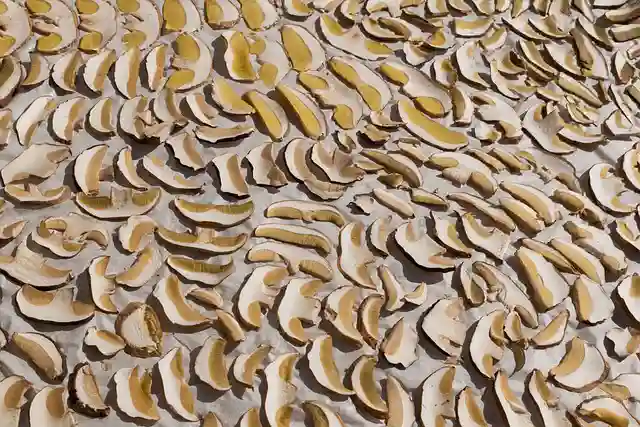
Here’s how to dehydrate mushrooms in oven:
- Just like with air drying, slice the mushrooms equaly thin.
- Lay your mushroom slices out on baking sheets, making sure there’s plenty of room between them.
- Pop those baking sheets with mushrooms in your preheated oven and dry them for about 6-8 hours.
- Keep an eye on your drying mushrooms and rotate the pans now and then to make sure they dry evenly.
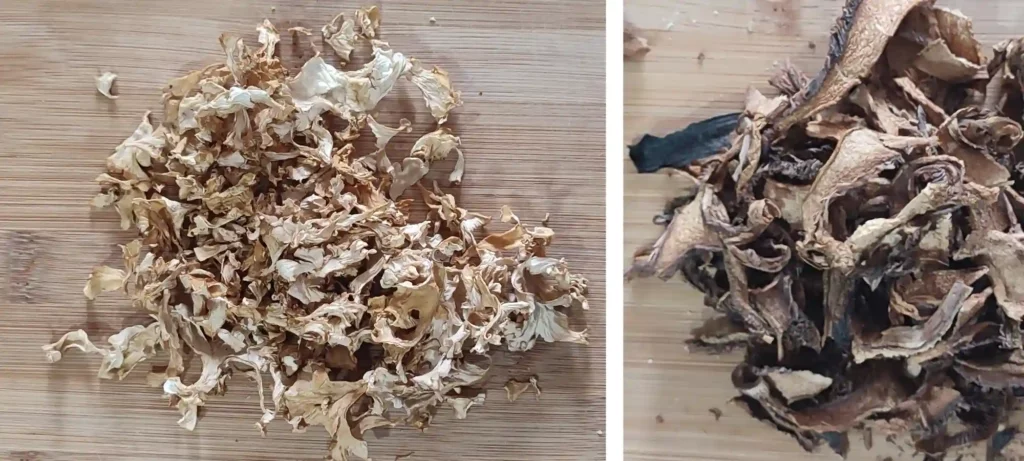
The picture shows how to dry porcini mushrooms at home in the oven. As you can see, they are sliced evenly and positioned so that each slice of mushroom has space, without overlapping. Image source: dried porcini mushrooms
How long to dehydrate mushrooms using oven?
To dehydrate mushrooms in oven, the process typically takes 6 to 8 hours depending on the type of mushroom, thickness of the slices. It’s recommended to slice mushrooms uniformly to ensure even drying.
Drying mushrooms in a dehydrator: The Best Ways to Preserve Your Fungi
How to dry mushrooms at home using a dehydrator?
If you don’t have a dehydrator, I would definitely advise you to get one. They are cheap and last a very long time. If you’re into mushrooms, I’m sure you’ll be using it a lot.
If you have a good dehydrator, you’re in luck! It makes drying fresh foraged mushrooms a breeze. Here’s how it works:
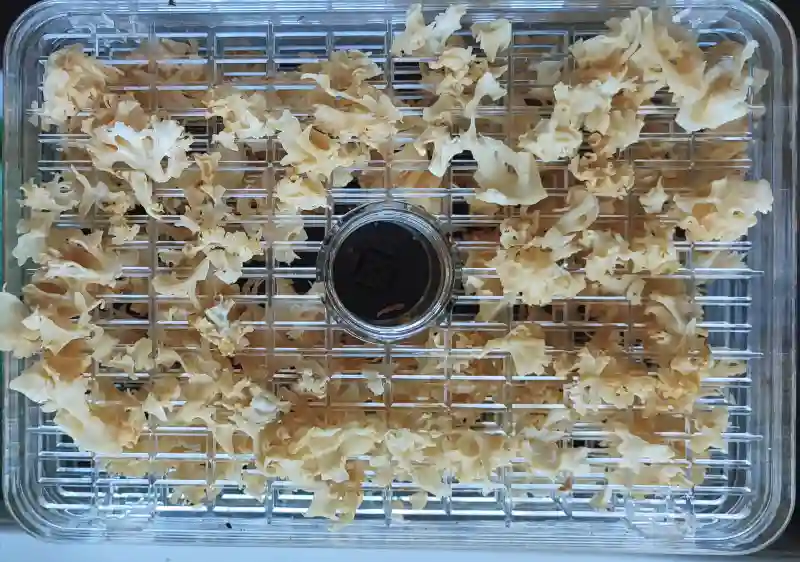
- As always, give your mushrooms a gentle cleaning and slice them up thin.
- Lay the mushroom slices on the dehydrator trays. Make sure there’s space between ’em for the air to circulate.
- Follow your dehydrator’s instructions for drying mushrooms, but generally, a temperature between 50-60°C(125-135°F) works mighty fine.
- Turn on your dehydrator and let it run for about 6-12 hours, or until mushrooms are nice and crispy.
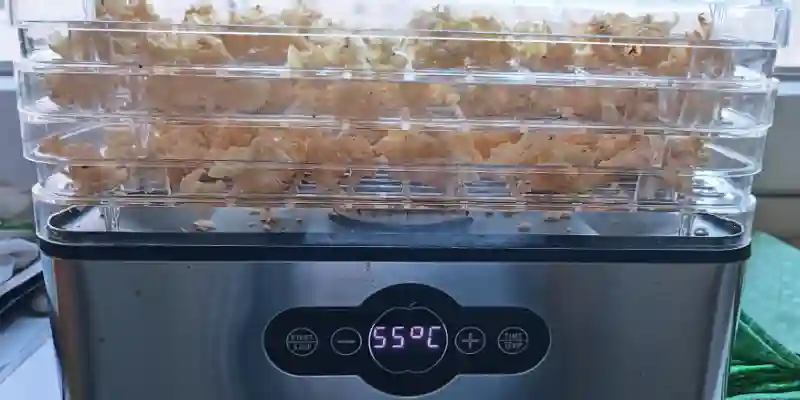
How long to dehydrate mushrooms using dehydrator?
The usual time for dehydrating mushrooms in dehydrator is 6 to 12 hours, depending on the type, thickness of the mushroom slices and the temperature of the dehydrator. It’s best to slice the mushrooms evenly to make sure they dry evenly too. Set your dehydrator at 125°F (52°C) and check the mushrooms now and then. They’re ready when they become brittle and snap easily.
Best mushroom types to dry
When it comes to drying wild mushrooms, not all varieties are created equal. Through trial and error, I’ve found that certain varieties thrive when dried, while others don’t.
Dried Morels mushrooms
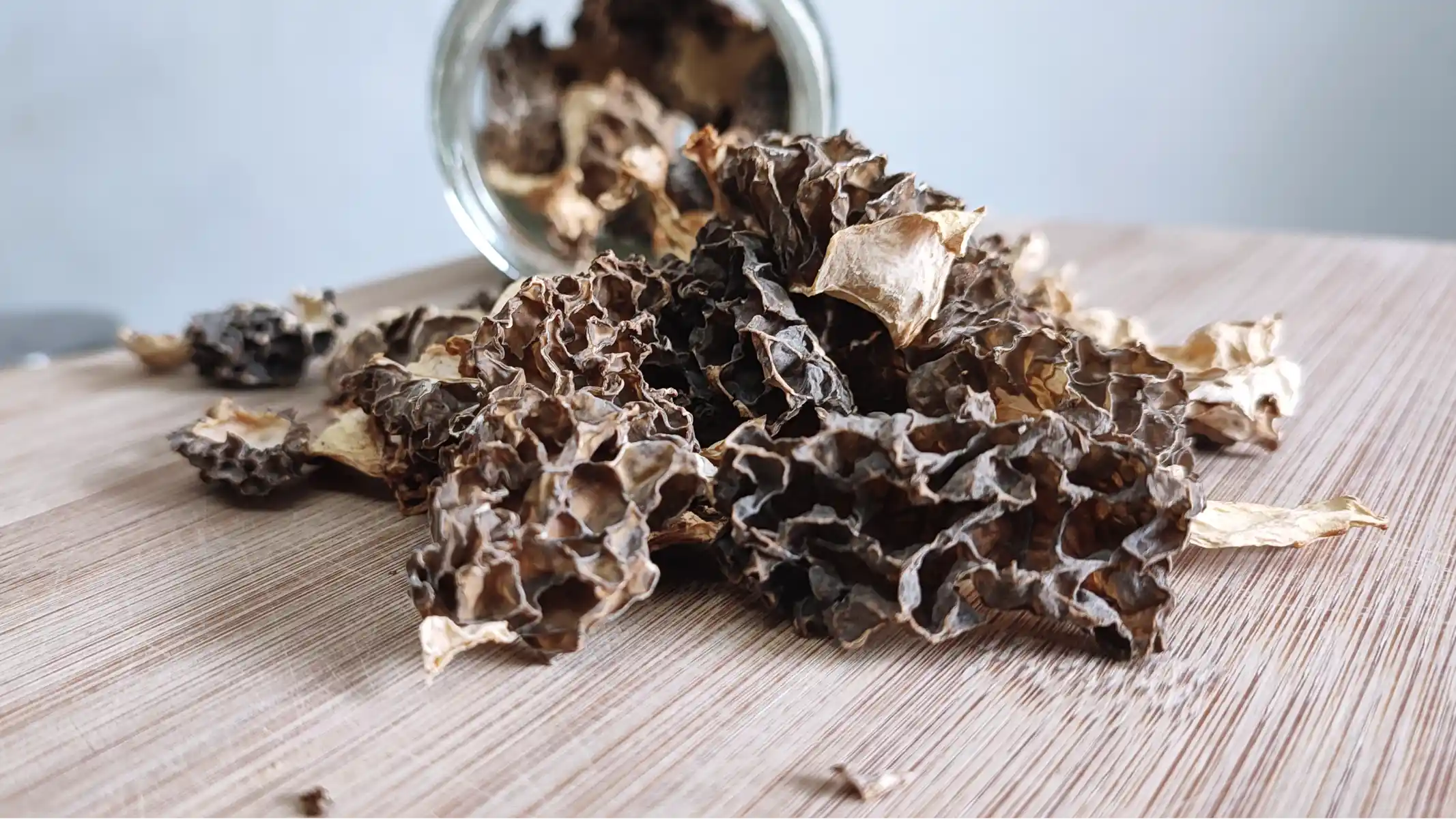
Morels develop an intense smoky flavour when dried. It’s as if you’ve taken their woodsy essence and turned up the volume. Dried morels are fantastic for boosting the flavour of sauces, soups, pizza toppings and more. A little goes a long way.
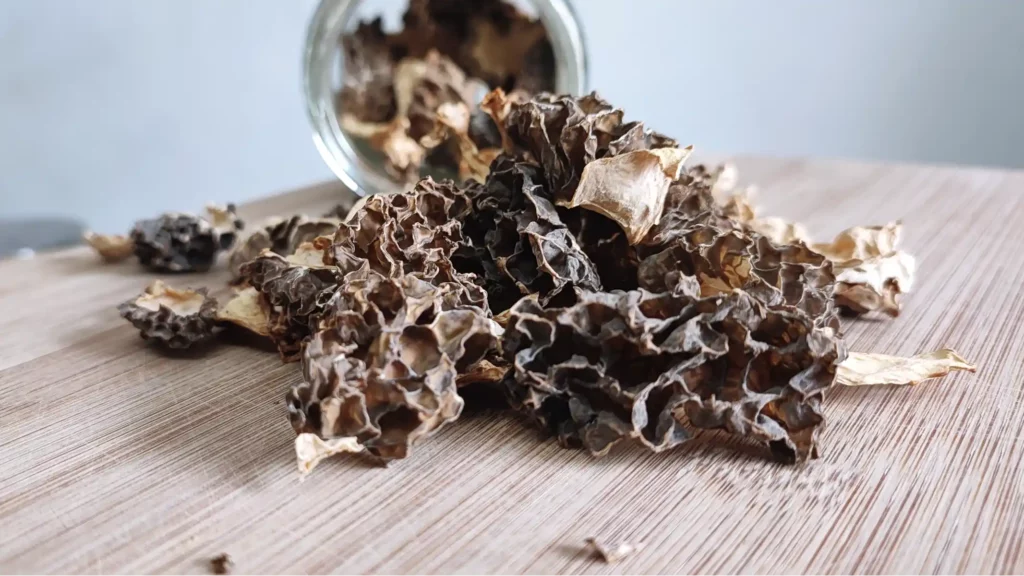
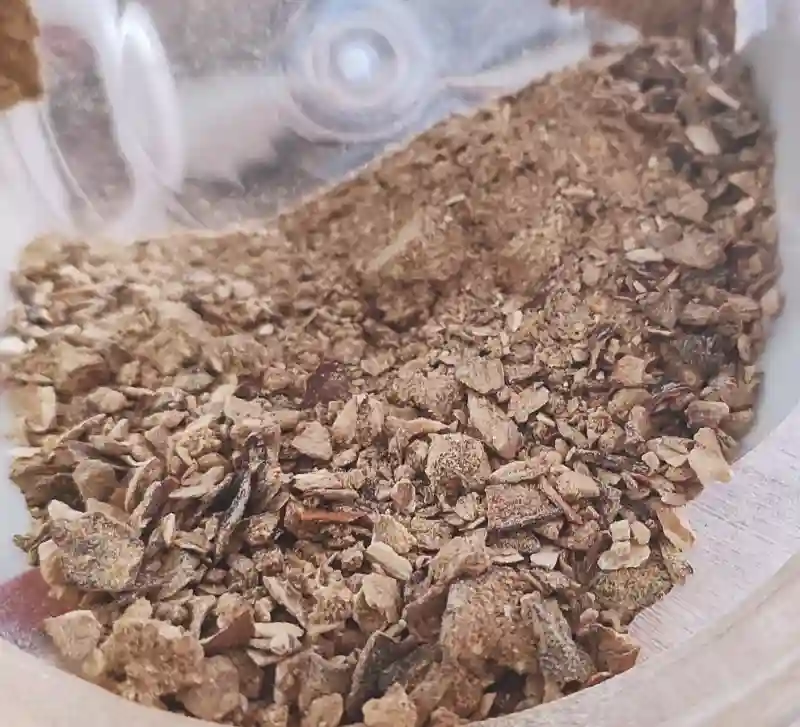
Dried Porcini mushrooms
Their earthy, robust flavour is concentrated when dried, almost as if you’re blasting flavour into each one. Dried porcini mushrooms are perfect for adding depth to risottos, sauces, soups – you name it. A little goes a long way. Here is my guide on how to soak and cook dried porcini mushrooms, and what to do with the flavourful soaking liquid.
Check out the following recipes. They’ll give you creative ideas for using dried porcini. Porcini mushroom pate & porcini mushroom roll
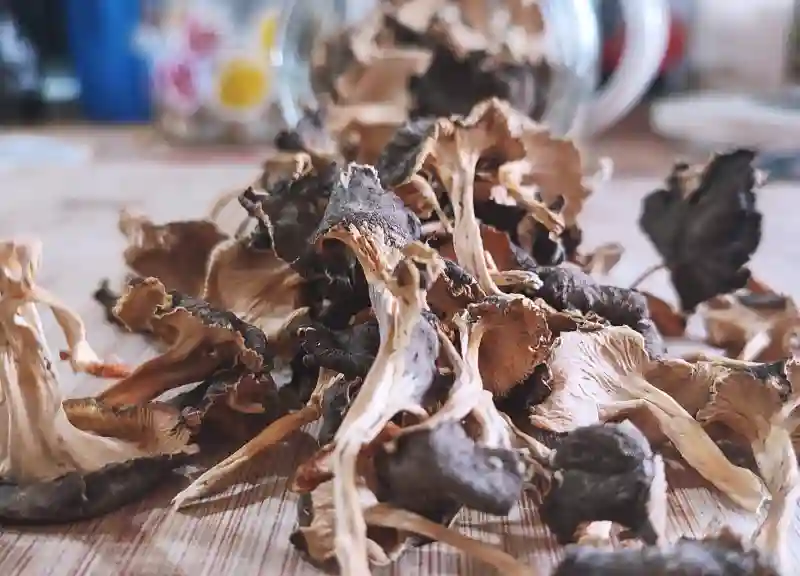
Dried Chanterelle mushrooms
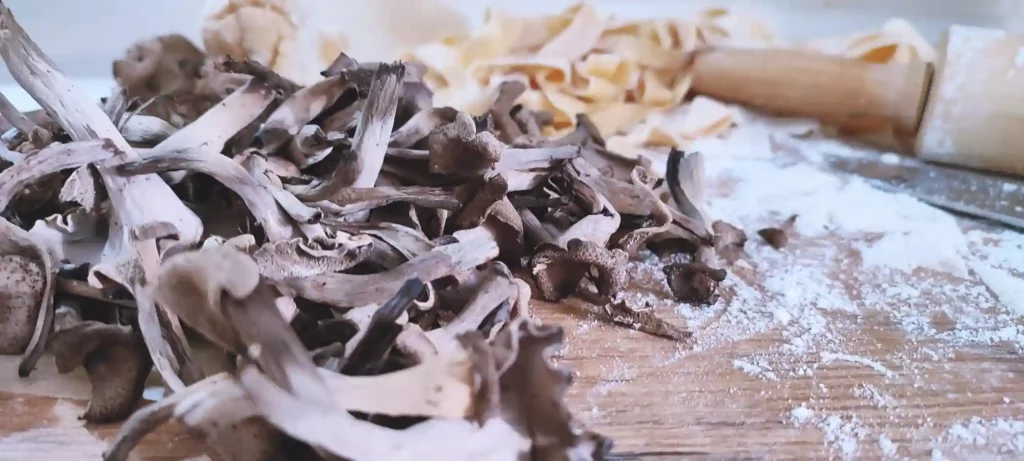
Golden chanterelles are the exception: dried whole, they turn leathery, so I freeze them instead – here is how to freeze chanterelles. I dry golden chanterelles only to grind them into powder, and for that they are wonderful. Winter chanterelles (yellowfoot) and black trumpets are the opposite: they dry beautifully. My winter chanterelles get 6½ hours at 60 °C in the dehydrator.
Other wild mushrooms I didn’t regret drying
Other mushrooms I’ve had success drying include cauliflower mushrooms, leccinum, lactarius, Craterellus and generaly all boletes do dry very well. Their meaty, rich flavours are concentrated by drying.
The key is to dry the mushrooms slowly at a low temperature so that they dehydrate evenly throughout.This helps to lock in the flavour and texture.
Experiment with different varieties – you may find some new favourites! Drying allows you to enjoy foraged mushrooms all year round.
Storing Dried Mushrooms
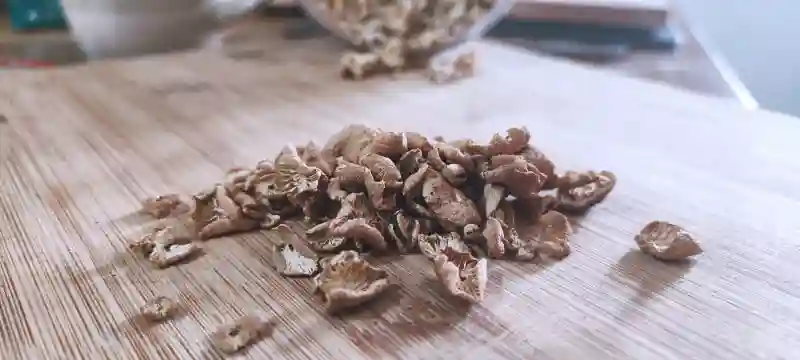
Well, that depends on how well you store them.
Find out more about how to preserve your mushrooms and how to store them properly.
Keep them dark and dry: an airtight jar in a cool, dark cupboard. Moisture and light are what spoil dried mushrooms, not time – stored like this, they keep for a year or more. Only jar them once they snap; if they still bend, they need more drying time. Check the jar now and then for moisture or insects.
How to Soak Dried Mushrooms
Now, before we get to the cooking part and how to use dried mushrooms, let’s rustle up some basics about these dried wild mushrooms. Here’s a quick lowdown on some dried mushroom varietals you might come across:
Before cooking with dried mushrooms.
Put the dried mushrooms in a bowl and pour hot water over them. Leave them for at least 10 minutes – 15–20 minutes is perfect, and longer doesn’t hurt. They plump up and turn tender. A fistful of dried mushrooms weighs 10–15 g. Don’t throw the soaking water away: strained, it is the best stock for your sauce, soup or risotto. For porcini step by step, see how to soak dried porcini.
What to do with the mushroom broth from soaking?
Strain it through a fine sieve to get rid of any dirt or gunk. This broth is like liquid gold – use it in your recipes for an extra kick of flavour.
If you find yourself with more mushroom broth than you need, don’t worry. Freeze it in ice cube trays or small containers, and you’ll have convenient mushroom-flavored cubes ready to enhance any dish whenever you desire.
Here are some more tips how to use mushroom broth from soaking
Pour that mushroom broth into your soups and stews to give them a rich, earthy flavor. Whether you’re making a hearty vegetable soup or a comforting beef stew, the mushroom broth will add depth and complexity to your creations.
- When preparing mushroom risotto, especially if you’re using dried porcini, consider using mushroom broth instead of regular stock. It will infuse your risotto with a savory and aromatic quality that’s truly delightful.
- Whether you’re crafting a mushroom gravy for your mashed potatoes or a creamy pasta sauce, incorporating mushroom broth will elevate your sauces to a whole new level of deliciousness.
- Replace plain water with mushroom broth when cooking grains like rice, quinoa, or couscous.
Mushroom Powder
Mushroom powder is the easiest way to use dried mushrooms – no soaking at all. I grind mine in an old coffee grinder that now works for mushrooms only, and I don’t sieve it: the little chunks disappear in butter or polenta. Golden chanterelles, which turn leathery when dried whole, make some of the best powder.
Use it like a spice in soups, bolognese, stews and scrambled eggs. Mixed with salt it becomes an everyday seasoning; stirred into gravy it adds flavour and thickens it; it also works in breadcrumbs and beaten into soft butter. A spoonful in hot broth is an instant soup – try my dried mushroom powder soup. Airtight and dark, the powder keeps for months.
Recipes With Dried Mushrooms
Dried mushrooms are versatile and can be used in many dishes. You can rehydrate them in water or broth and use them as you would fresh mushrooms. You can also grind them into a powder and use them as a seasoning. Here are some delicious dried mushroom recipes to try:
- Dried porcini: how to soak, cook and use them – my guide, with the soaking water tricks.
- What to do with parasol mushroom stems – dry the tough stems and grind them into powder.
- Dried mushroom powder soup – a spoonful of powder, a pot of broth, done.
- Zucchini scarpaccia with trumpet mushrooms – soaked dried black trumpets in a crisp zucchini bake.
- Vegetarian ramen broth – a fistful of dried black trumpets makes it dark and smoky.
- Hot and sour mushroom soup with black trumpets – dried black trumpets and porcini in a tangy, peppery broth.
- Black trumpet mushroom lasagna – made with dried black trumpets.
- Creamy risotto with dried porcini – the soaking water goes in with the stock.
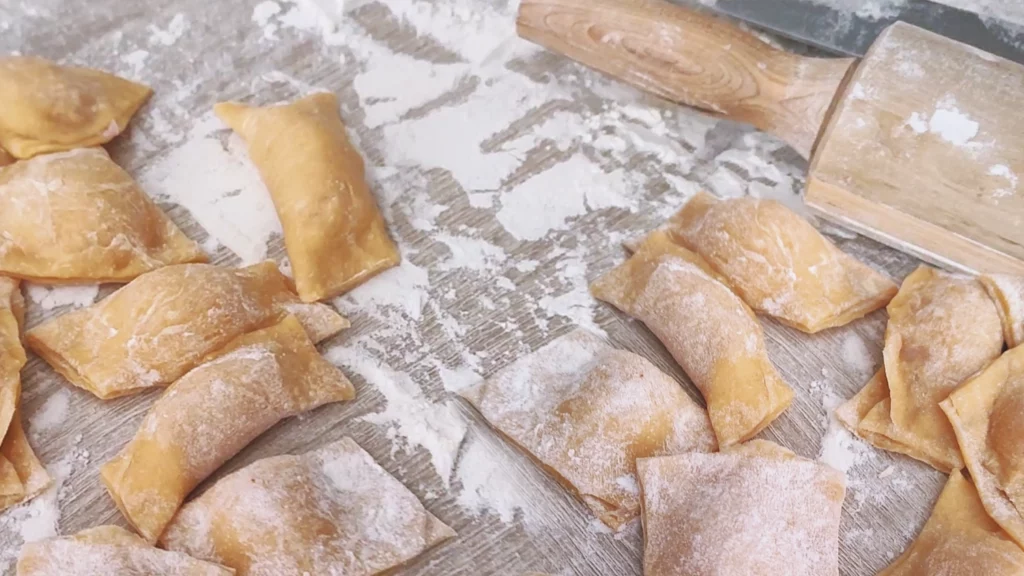
This delicious homemade pasta filling is simple and satisfying dish that uses dried and fresh chanterelle mushrooms.
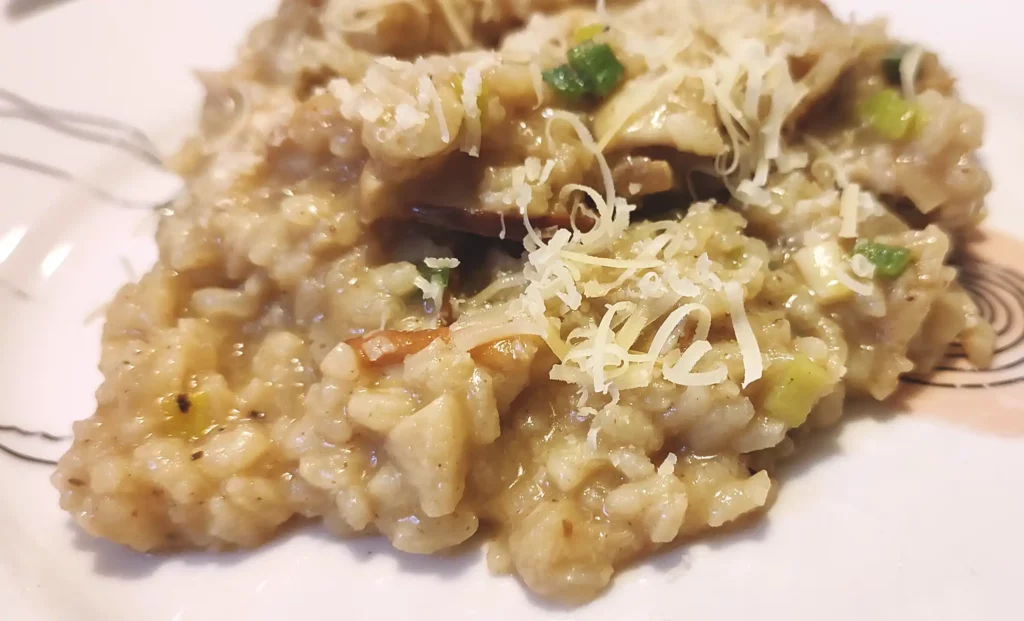
This classic dish is made with frozen and dried porcini mushrooms. You can use any dried mushrooms you like.
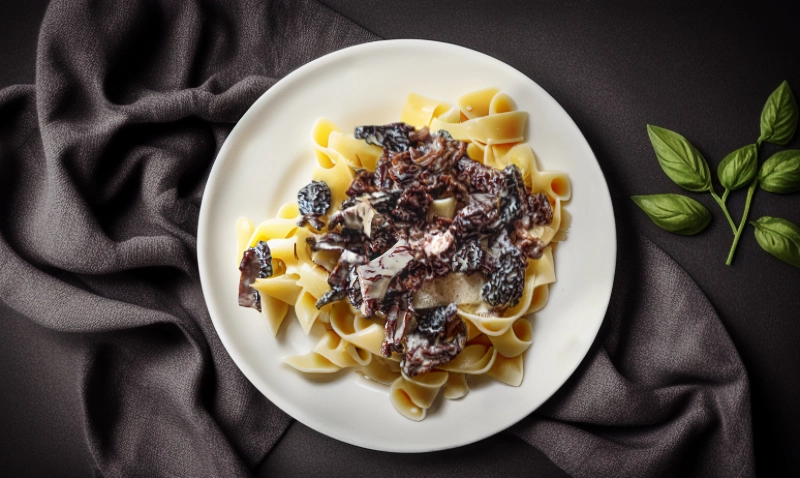
This simple and satisfying dish uses dried morel mushrooms to create a rich and creamy sauce for your favorite pasta. You can also add some fresh parsley and parmesan cheese for extra flavor.
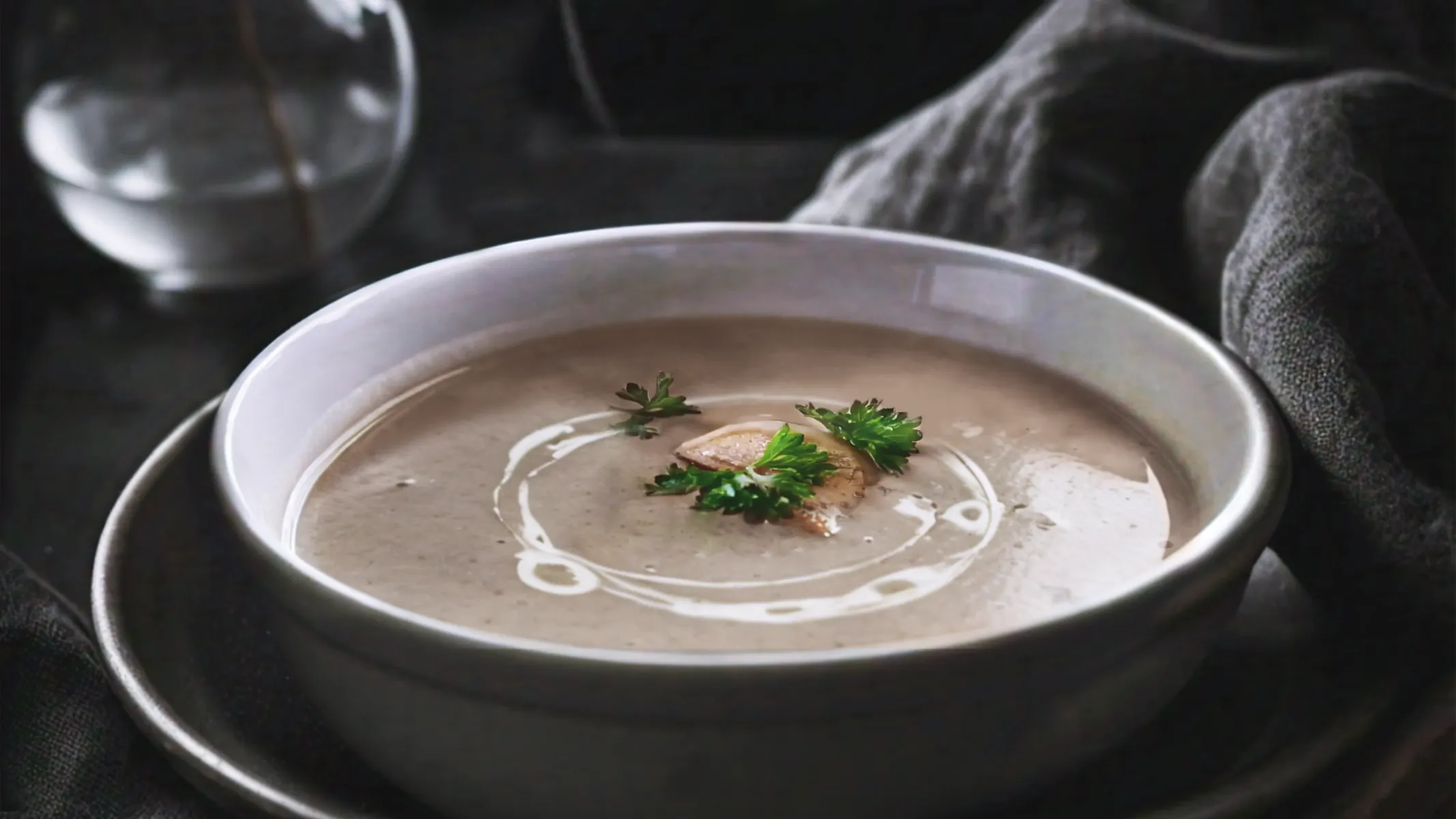
This quick and easy warming soup is perfect for cold days. You can use a mix of dried mushrooms, such as shiitake, oyster, and chanterelles too, to create a complex and savory broth.

This recipe is calling for fresh Cauliflower Mushroom but you can use dried mushrooms instead of resh ones by soaking them in water. Instead of adding water to the soup, you can use soaked dried mushrooms broth.
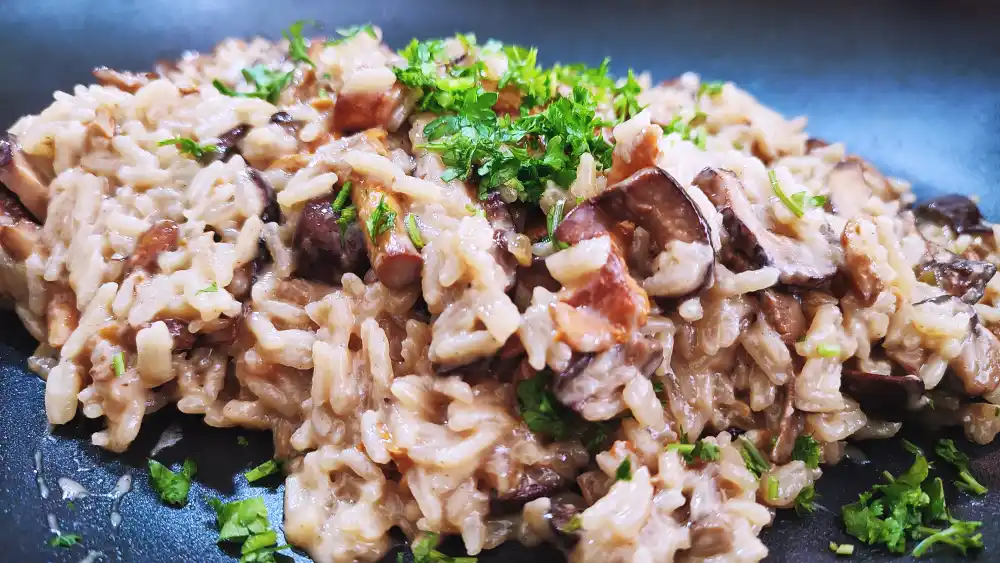
This recipe is calling for fresh Mushrooms but you can use dried mushrooms instead of fresh ones by soaking them in water. Instead of vegetable broth for risotto you can use soaked dried mushrooms broth.
Tips and Tricks for Cooking with Dried Mushrooms
- Substituting Fresh for Dried: In some recipes, you can swap fresh mushrooms for dried ones. Just remember, about 30grams (1 ounce) of dried mushrooms is like 200gram (7 ounces) of fresh ones, but the flavor’s gonna be punchier.
- Use Dried Mushrooms Broth: Don’t throw out that mushroom soak water! It’s a flavor bomb. Use it to jazz up your soups, sauces, and risottos for an extra dose of umami.
In short, dried mushrooms are like the secret weapon in your kitchen arsenal. Whether you’re looking to add a little pizzazz to your dishes or you’re aiming for culinary greatness, these dried treasures are the way to go, so rehydrate, get cooking and enjoy the flavours these mushrooms bring to your table.
FAQ About Dried Mushrooms
Do dried mushrooms need to be soaked?
Absolutely! Dried mushrooms need a dip in hot water to come back to life. Soaking them makes them tender and ready to join the party in your dishes.
What’s the best way to cook dried mushrooms?
Well, that depends on your recipe. You can sauté them, simmer them or, after a good soaking, add them straight to dishes like soups and stews. Just remember to give them that rehydration love first.
Can you put dried mushrooms directly into soup?
While it’s perfectly possible to add dried mushrooms directly to your soup, especially if you’re using dried mushroom powder, taking the extra step to rehydrate them ensures you get the most out of their unique flavour and texture.
It’s a simple but effective way to take your soup to a whole new level of deliciousness.
Should dried mushrooms be soaked in cold water until soft?
No, I wouldn’t recomend soaking dried mushrooms in cold water. Dried mushrooms prefer a hot soak to get them soft and plump. Soaking in cold water may take longer and not be as effective.
How long should dried mushrooms be soaked before cooking?
Well, it depends on their size and thickness. At least 10 minutes in hot water – 15–20 minutes is perfect for most, and longer doesn’t hurt.
Can you eat dried mushrooms raw?
It’s not a good idea to eat dried mushrooms raw, without first cooking them or eating them straight from the bag. They need to be properly rehydrated and cooked to be safe and tasty. They may have undergone some thermal processing, but this is not enough to prevent potential stomach or digestive problems.
Can I soak dried mushrooms overnight?
You can if you like. But it’s not usually necessary. Most dried mushrooms are plump and tender after 15–20 minutes in hot water.
Do you soak dried mushrooms in hot or cold water?
Hot water is the best way to rehydrate dried mushrooms. It gets the job done quicker and imparts flavour.
Why use dried mushrooms instead of fresh?
Dried mushrooms have a concentrated flavour and last longer than fresh mushrooms. They’re available all year round, and they add a lot of umami to your dishes.
How long do dried mushrooms keep?
Stored airtight in a cool, dark place, dried mushrooms keep for a year or more. Moisture and light spoil them, not time.
Should you rinse dried mushrooms?
There is no need to rinse them before soaking. Lift the soaked mushrooms out of the water and strain the water through a fine sieve to catch the grit; if you still feel sand, give the mushrooms a quick rinse.
Can you dry mushrooms from the supermarket?
Yes. Button mushrooms, shiitake and oyster mushrooms dry well – slice them about 5 mm thick and dry them the same way as wild mushrooms.
Turbo Tasty’s Collection of Wild Mushroom Recipes