Homemade Wild Garlic Salt: The Ultimate Guide (Ratio & Pro Tips)
If you’ve ever walked through a forest in late March and wondered why it smells like a five-star Italian kitchen, you’ve met Bärlauch (wild garlic). It’s the moody, elusive cousin of the onion family, and capturing its soul in salt is the best way to keep that flavor alive all year round.
Table of Contents
The Forager’s ID: Is it Really Wild Garlic?
Before you start blending, you need to be 100% sure you haven’t picked a “look-alike” that could land you in the hospital. While the smell is the most famous trait, it’s actually a trap: after picking three leaves, your hands smell like garlic regardless of what you touch.
Use these 5 physical markers to be absolutely certain:
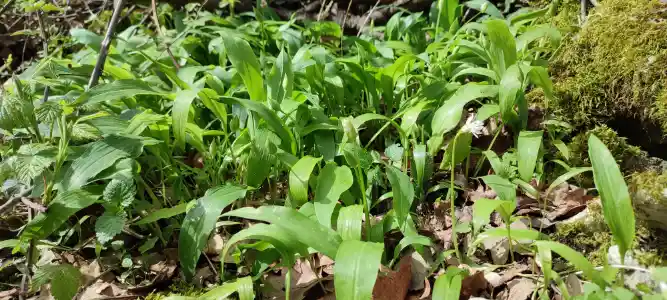
Top vs. Bottom (The Shine Factor): Wild garlic leaves have a “dual personality.”
- Top side: Vibrant, deep green and shiny.
- Bottom side: Noticeably mat (dull) and lighter in color. If the leaf is shiny on both sides, it’s likely a toxic Lily of the Valley.
The “Pointy” Silhouette: Look closely at the shape. A wild garlic leaf is lance-shaped and pointy at both ends: it tapers to a sharp point at the tip and narrows down significantly at the base where it meets the stem.
The Single White Stem: Check the growth habit. Each wild garlic leaf grows on its own individual, long, white stem coming straight out of the ground. They don’t share a stem like a leek, or if you see multiple leaves branching off a single stalk, it’s an impostor.
The “Kackack” Snap Test: A true wild garlic leaf is crisp and brittle in the center; it should make a distinct “kackack” snapping sound when the middle vein breaks. If it just bends or folds like limp lettuce, stay away.
The information provided here is for culinary and educational purposes only. Foraging for wild garlic (Allium ursinum) comes with serious risks. It looks strikingly similar to Lily of the Valley and Autumn Crocus, both of which are highly toxic and can be fatal. Always use a reliable identification guide, and if you are in any doubt whatsoever, do not consume it. Consult a local expert or stick to farmer’s markets if you aren’t 100% sure.
What is the ratio of wild garlic to salt?
This is the golden question. If you use too much salt, you lose the herb; too much garlic, and your salt stays soggy. After many (very delicious) trials, the magic ratio for the perfect texture and flavor is:
The 1:5 Rule: Use 1 part wild garlic to 5 parts coarse sea salt (by weight). For example: 50g of wild garlic leaves for every 250g of high-quality salt.
How do you make wild garlic salt? (Step-by-Step)
After foraging (or “grocery-store-foraging”), wash your leaves thoroughly. Pat them dry with a towel, then let them air-dry for an hour. If they are wet, you’ll end up with “wild garlic soup,” which is tasty, but not what we’re aiming for today.
For a side dish spread that’ll have your neighbors climbing the fence, try sprinkling this wild garlic salt over some smoky Elote Corn or using it to top these buttery Texas Roadhouse Rolls for a garlicky, savory upgrade.
The Ultimate Guide to Homemade Wild Garlic Salt
Difficulty: EasyPrep time10
minutesCooking time2
hoursThis isn’t rocket science, but it does require a bit of finesse. Follow these steps to become the Gordon Ramsay of your local forest.
Ingredients
50g Fresh Wild Garlic Leaves
250g High-Quality Sea Salt
Directions
- Water is the enemy. After washing your leaves, you must dry them. Use a salad spinner, then pat them with paper towels. Let them sit out for an hour. If they’re wet, your salt will clump and turn brown.
- Throw your dry leaves into a food processor with one-third of your salt. Pulse until it looks like a bright green, damp sand. Don’t over-process into a liquid!
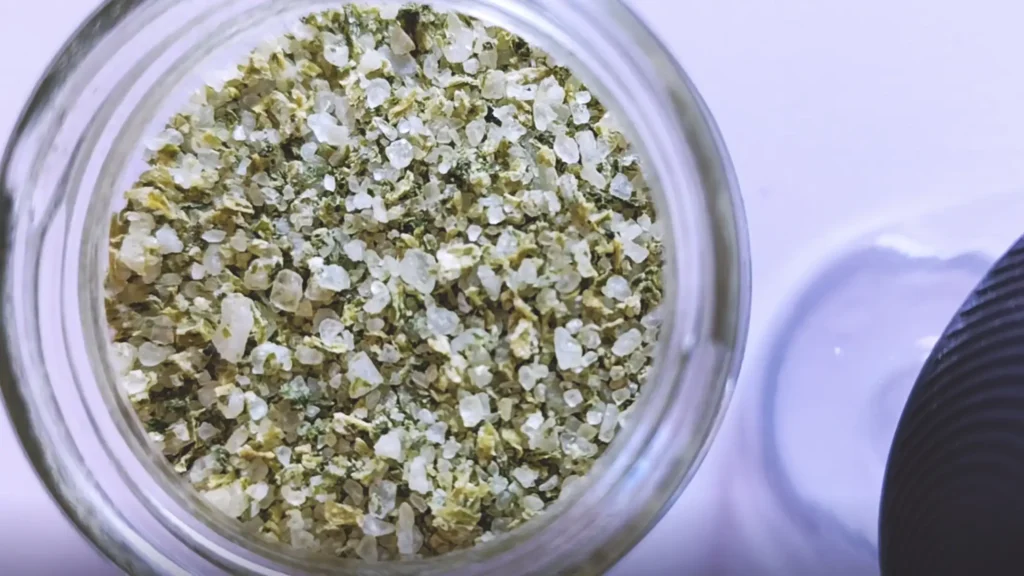
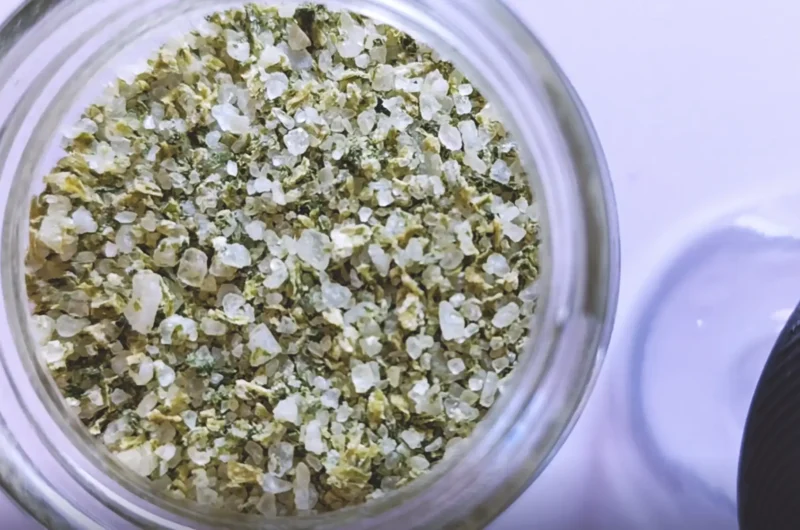
- Stir in the remaining two-thirds of the salt, and pulse very shortly. This gives you a beautiful “multi-tonal” look with some pure white crystals and some emerald green ones.
- Spread the mixture thinly on a baking sheet.
- Temp: Keep it low! 40°C to 50°C (100°F–120°F).
- The Trick: Prop the oven door open with a wooden spoon to let moisture escape.
- Time: 3–4 hours. It’s done when it’s completely brittle and doesn’t feel “tacky” to the touch.
Recipe Video
The Dehydrator Method
You can also dry wild garlic salt at home using a dehydrator. While the oven works in a pinch, a dehydrator is great for homemade wild garlic salt because it uses constant airflow at ultra-low temperatures. This preserves the essential oils without “toasting” the flavor away.
Most dehydrator trays have wide mesh holes. Instead of buying expensive “fruit leather” inserts, do this If your dehydrator has a center column:
- Cut the Squares: cut your baking paper into rectangles, specifically leaving the center hole and the outer edges completely free. Most dehydrators blow air from the bottom or the center. By leaving the middle and the surrounding gaps open, you create a “wind tunnel” effect. The air circulates over and under the salt, drying it in half the time.
- Spread it Thin: Don’t pile the salt high. Spread a thin layer on each rectangle. This ensures every single grain of salt gets kissed by that dry air.
- The Sweet Spot: Set your dehydrator to 60°C (140°F).
- The Wait: Let it run for 1 to 2 hours. It’ll likely be ready on the earlier side.
- The Crunch Test: Rub a bit of the salt between your fingers. If it feels like dry sand and doesn’t stick to your skin, it’s done.
How to Use Your New Superpower – Wild Garlic Salt
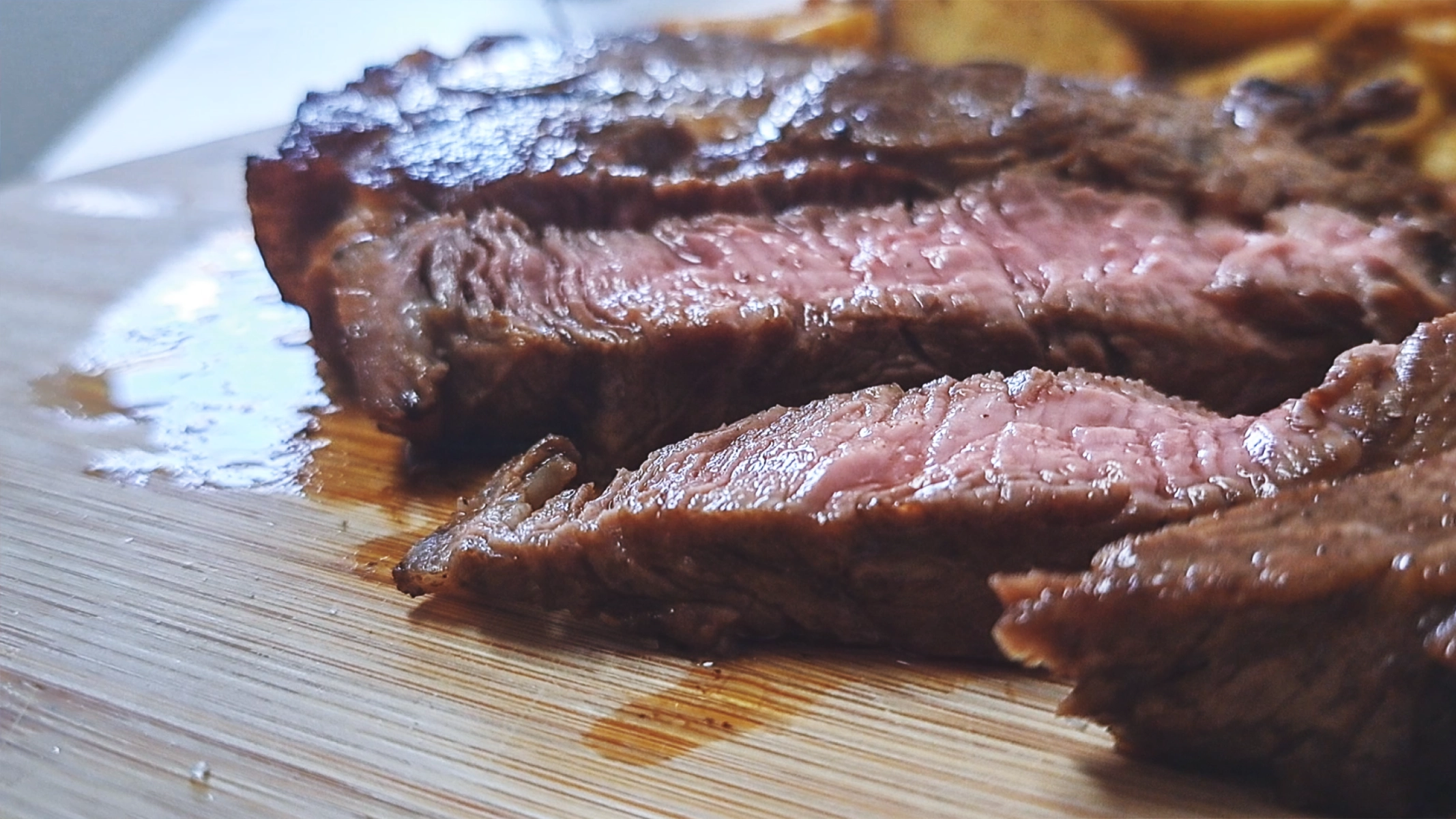
This isn’t just for steaks. Sprinkle your homemade wild garlic salt on:
- Freshly popped popcorn (trust me on this one).
- Roasted potatoes or fries.
- A simple buttered piece of sourdough bread.
- Grilled salmon or roasted chicken.