Homemade Easy Wild Garlic Pasta Dough
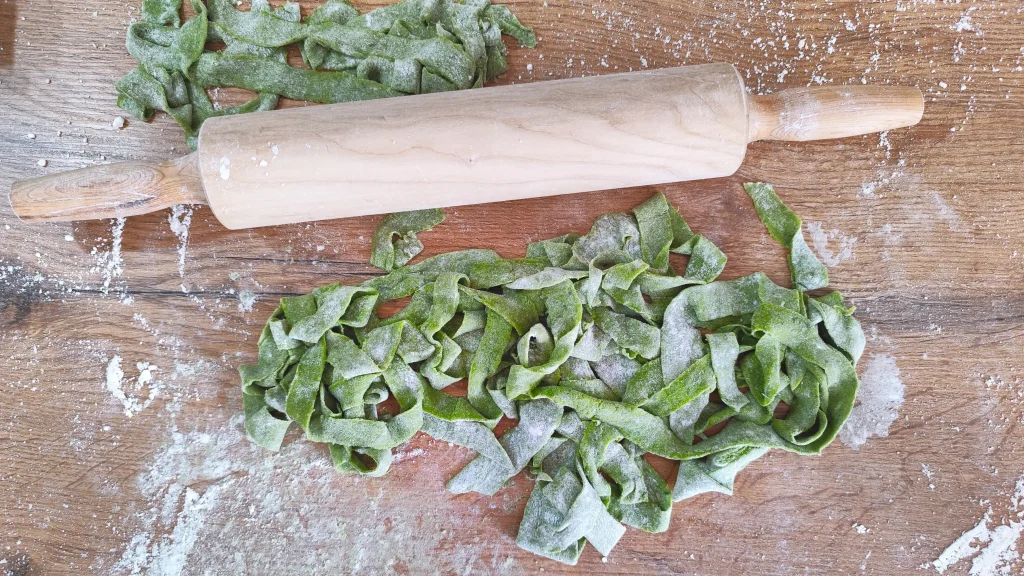
This wild garlic pasta dough is the most stunning pasta you’ll make this spring, with vibrant green noodles and a fresh garlic flavour.
Wild garlic season starts soon (YEAH, this means that wild garlic pesto will soon be on your menu!) and runs from mid-March through May in Europe. This recipe uses a food processor to keep things mess-free, and the dough takes about 15 minutes to come together before resting.
The result is silky, vibrant pasta dough that can be used for fettuccine, pappardelle or ravioli – or any other shape you desire.
Table of Contents
Wild garlic is a gorgeous ingredient, but it comes with homework and a pretty serious warning label. In English it is commonly called wild garlic or ramsons, and the Latin name is Allium ursinum. Every year there are poisoning cases – including fatal ones – in Central Europe when people mistake toxic plants for wild garlic. Public health agencies issue regular safety warnings about it.
If there is even 1% doubt about what you picked, the only safe move is not to eat it.
Wild Garlic Pasta Dough Infographic
Step-by-Step Method
- Blanch chopped wild garlic 30 seconds in boiling water,
- Shock in ice water, squeeze dry like spinach – this kills enzymes and sets color.
- Mound flour on board, make well, add eggs and garlic paste
- Beat with fork pulling in flour until shaggy
- Knead 10 minutes by hand: fold dough, press heel of palm, rotate – it starts stiff but turns silky.
- Rest wrapped 30 minutes at room temp so gluten relaxes for rolling.
- Divide into quarters. Roll one piece paper-thin (1-2mm) with rolling pin
- Loosely roll sheet, slice into 1/4-inch tagliatelle with knife
- Cook fresh in boiling salted water 1-3 minutes till al dente.


Wild Garlic Pasta Dough Recipe
This Wild Garlic Pasta Dough recipe is your ticket to impressing everyone at the dinner table while making the most of spring foraging bounty. The vibrant color, fresh flavor, and silky texture beat any store pasta. Go foraging and make spring come alive on your plate!
Homemade Easy Wild Garlic Pasta Dough
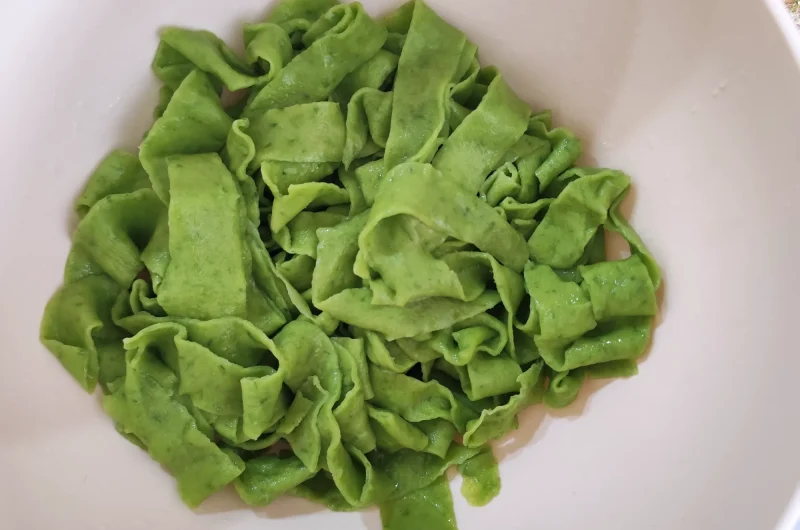
Difficulty: EasyThis Wild Garlic Pasta Dough recipe is your ticket to impressing everyone at the dinner table while making the most of spring foraging bounty. The vibrant color, fresh flavor, and silky texture beat any store pasta. Go foraging and make spring come alive on your plate!
Ingredients
250g all-purpose flour (or tipo 00 flour for extra silkiness)
150g fresh wild garlic leaves (Ramsons), washed
3 eggs
Pinch of salt
Extra flour for kneading
Directions
- Blanch the wild garlic leaves in boiling water for 30 seconds, then plunge them into ice water and drain them well. Blend in a food processor with eggs and salt until you have a smooth green liquid with a weight of about 120 g.
- Dump your flour into the food processor with the S-blade attached. Pour in the green wild garlic liquid and pulse until you get a crumbly, breadcrumb-like texture. It’ll look dry at first – that’s totally normal.
- Transfer the crumbly dough to a flat surface and start kneading. Knead for 10-15 minutes, adding flour bit by bit if it’s sticky. You’re aiming for smooth, elastic dough that feels like firm play dough. At first it’ll feel tough, but keep going – it transforms into silky ball.
- Wrap in foil, rest 30 minutes at room temp.
- Roll the dough thin on a heavily floured surface – aim for 1-3mm thickness depending on your pasta shape. Use a pasta machine starting on the widest setting, or go old-school with a rolling pin. Cut into your favorite shape: fettuccine strips, wide pappardelle, or sheets for ravioli.
- Boil a large pot of heavily salted water (the dough has very little salt, so season your water well). Drop in your fresh pasta and cook for just 2-3 minutes until it floats and is al dente. Fresh pasta cooks lightning-fast compared to dried!
Notes
- These measurements are flexible – focus on dough texture over exact grams, just like classic homemade pasta.
Homemade Wild Garlic Pasta Dough FAQ
How to identify wild garlic(ramsons)?
Wild garlic is usually easy to recognise once you know what to look for, but the danger is that it often grows mixed with similar-looking poisonous species such as lily-of-the-valley.
Many will say that the most important check is the smell test – crush a leaf firmly between your fingers – true wild garlic smells strongly and unmistakably of fresh garlic.
That’s true for your first leaf, but after handling 10+ leaves, your hands reek of garlic. Every leaf you check afterward could smell “garlicky”, making the smell test unreliable.
Instead, check visually: it is an oval shape that tapers to a point at each end, measuring 10–20 cm in length. The upper side is a vibrant shade of green and shiny, while the underside is a dull green. When you bend the leaf, the white middle part will break with a fresh-sounding ‘crack’. Each leaf grows individually out of small bulbs with fine roots, like spring onions. They grow singly from a central bulb base, not in pairs.
The leaves themselves are soft and smooth with a lance-like shape (much longer than wide, with the broadest part towards the base and a pointed tip). They grow individually from the base of the plant.

Confirm visually instead:
- Lance-shaped leaves: narrow oval, pointed at both ends, 10-20cm long, widest near base
- Shiny vibrant green on top, matte green underneath
- Bend leaf: crisp “snap” sound as white midrib breaks
- Single leaves grow directly from small bulbs with fine roots (like spring onions), never paired
- Habitat: damp shady woodlands only, never dry fields
- Pick one plant at a time, never handfuls
P.s. – toxic lookalikes do not smell of garlic at all.
Habitat: damp shady woods, never dry fields. Collect one plant at a time, never handful.
These are just quick tips, no short paragraph can replace proper local knowledge or a good field guide. The safest approach is to learn wild garlic in person from an experienced forager in your area and to cross‑check with multiple trusted sources the first few times you pick it.
Can I freeze wild garlic pasta dough?
Absolutely! Wrap tightly and freeze for up to 3 months. You can also freeze cut pasta nests on a floured tray, then bag them up once frozen.
My pasta dough is too sticky – help!
Keep kneading and add flour in small amounts. It takes 10-15 minutes of solid kneading for the dough to transform from sticky to silky.
Do I have to blanch the wild garlic?
Blanching keeps the color vibrant green and softens the leaves for easier blending. Skip it if you want a more rustic look, but expect duller color.
Can I use other wild greens?
Yes! Nettles, spinach, or other foraged greens work using the same technique. Wild garlic just has that special garlicky kick.